

Coating Service Overview
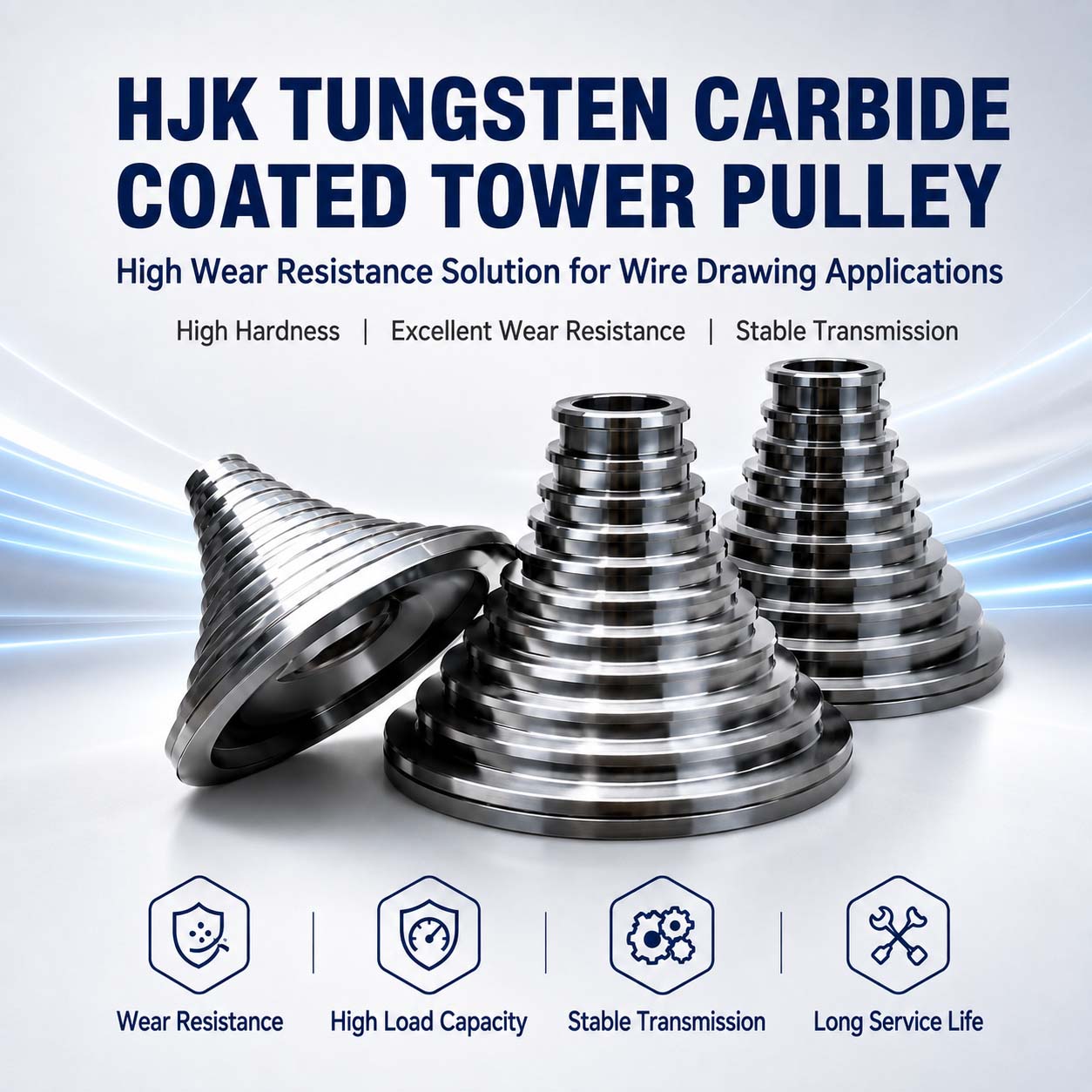
In metal wire drawing processes, the tower pulley is a critical component responsible for power transmission and wire diameter control. By applying a tungsten carbide coating to the surface of the base material, the tungsten carbide tower pulley achieves significantly improved wear resistance and longer service life, making it a preferred choice for many wire drawing machine manufacturers and users.
This article introduces the structure, applications, advantages, selection, and maintenance of tungsten carbide coated tower pulleys.
Structure and Working Principle
A tungsten carbide tower pulley is not usually made entirely of tungsten carbide. Instead, it uses a metal substrate such as steel or aluminum alloy, with a wear-resistant tungsten carbide coating applied through advanced thermal spraying technology.
The coating provides:
- Extremely high hardness
- Low friction coefficient
- Excellent wear resistance
It effectively reduces surface damage caused by high-speed wire movement.
The tower pulley features a stepped diameter design. Different groove diameters work together with drawing dies to achieve multi-pass wire reduction. The coating thickness, bonding strength, and surface finish directly affect service life and production stability.
Main Applications
Tungsten carbide tower pulleys are widely used in various wire drawing machines for different production requirements:
Fine Wire Drawing Machine Tower Pulley
Designed for small-diameter wire production, requiring excellent surface finish and high precision.
Micro Wire Drawing Machine Tower Pulley
Used for ultra-fine wire applications where dimensional accuracy and surface quality are critical.
Multi-Head Wire Drawing Machine Tower Pulley
Suitable for simultaneous multi-wire drawing processes, requiring accurate groove dimensions and consistent performance.
Take-Up Roller Assembly
Used for wire tension control and stable wire feeding during drawing operations.
In addition, aluminum alloy guide rollers can also be enhanced with tungsten carbide or ceramic coatings to achieve lightweight design and improved wear resistance.
Advantages of Tungsten Carbide Coating
Excellent Wear Resistance
Tungsten carbide has extremely high hardness, providing outstanding resistance against abrasive and adhesive wear, significantly extending pulley service life.
Low Friction Performance
The smooth coating surface reduces friction between the wire and pulley, improving drawing efficiency and reducing energy consumption.
Corrosion Resistance
The dense coating structure provides good resistance to lubricants, cooling fluids, and harsh working environments.
Repairable Surface
When wear occurs, the pulley can be restored through grinding, recoating, and precision machining, reducing replacement costs.
Selection and Maintenance Guide
How to Select the Right Tower Pulley
- Wire Material:
Hard materials such as steel wire may require stronger coatings and higher bonding strength. - Drawing Speed:
High-speed applications require excellent coating adhesion and precise dynamic balancing. - Pulley Diameter and Groove Design:
Groove dimensions must match the drawing die and wire diameter requirements. - Base Material:
Steel substrates provide high strength, while aluminum alloy substrates offer lightweight advantages.
Maintenance Recommendations
- Regularly inspect coating wear and prevent excessive damage or local peeling.
- Keep lubrication systems clean to avoid abrasive particles entering the coating surface.
- Avoid impact during transportation and storage to prevent coating cracks.
- Repair or replace the pulley when wear exceeds allowable limits.
Frequently Asked Questions
How long is the service life of a tungsten carbide tower pulley?
Service life depends on wire material, drawing speed, lubrication conditions, and operating environment. Generally, tungsten carbide coated pulleys provide several times longer service life than untreated pulleys.
What should be done if the coating peels off?
Small damaged areas may be repaired. For severe coating failure, recoating is recommended after checking the substrate condition.
Can tungsten carbide tower pulleys be used for wet wire drawing?
Yes. Tungsten carbide coatings provide good corrosion resistance and are suitable for drawing processes using oil or emulsion lubrication.
When does the pulley need regrinding?
Regrinding or refurbishment is required when wire scratches appear or groove wear exceeds the permitted tolerance.
Tungsten carbide coating or ceramic coating, which is better?
Tungsten carbide provides higher toughness and wear resistance, making it suitable for high-load applications. Ceramic coatings offer excellent temperature resistance and low friction but have higher brittleness.
Are custom sizes available?
Yes. Tungsten carbide tower pulleys can be manufactured according to customer drawings, samples, and machine specifications.
Tungsten carbide coated tower pulleys provide a reliable solution for high-speed wire drawing applications, combining high wear resistance, precision performance, and extended service life.
