

- Service: Multi-Head Wire Drawing Machine Tower Pulley
- Category: Featured Products
Coating Service Overview
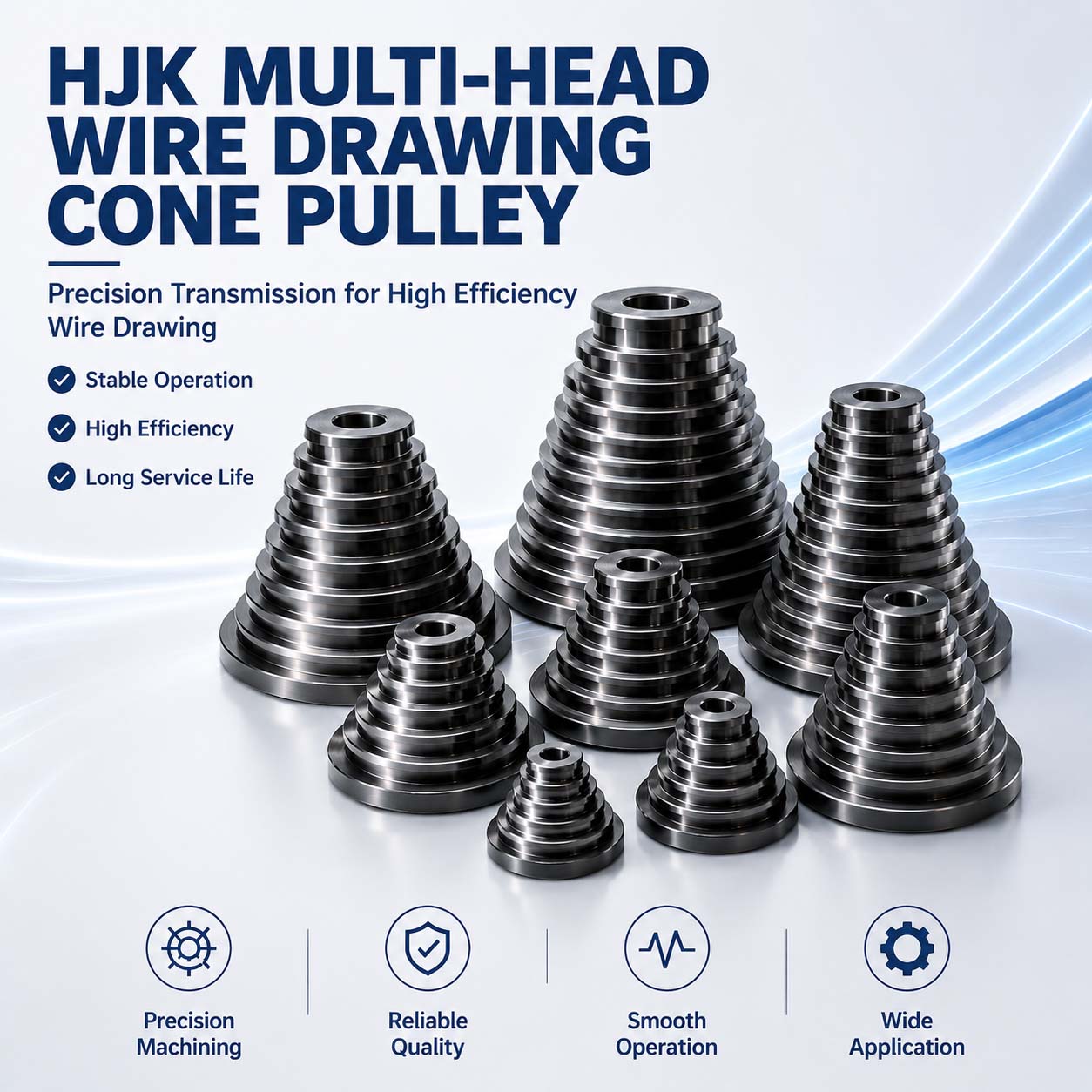
In metal wire processing, the multi-head wire drawing machine tower pulley is a critical transmission and guiding component responsible for gradually reducing wire diameter to the required size. Its performance directly affects drawing speed, wire surface finish, dimensional accuracy, and overall equipment stability.
For different wire materials, drawing passes, and production speeds, selecting the right tower pulley and maintaining it properly are essential for efficient wire drawing operations.
Structure and Working Principle
A multi-head wire drawing tower pulley usually consists of multiple stepped grooves with different diameters. The wire passes through each groove sequentially and works together with drawing dies to achieve continuous diameter reduction.
During operation, the pulley surface is in direct contact with the wire and experiences friction, bending stress, and heat. The structure must ensure smooth wire transition between each stage to prevent wire jumping, tension fluctuation, or surface damage.
Common Tower Pulley Types
Integrated Tower Pulley
Manufactured from a single material, featuring compact structure and high rigidity. Suitable for small-size wire drawing applications.
Combination Tower Pulley
The pulley rings and core are made from different materials and connected through thermal fitting or mechanical assembly. Worn rings can be replaced separately, reducing maintenance costs.
Material Selection and Surface Treatment
A high-performance tower pulley requires high hardness, excellent wear resistance, and sufficient toughness. Common materials include tool steel, cemented carbide (such as tungsten carbide), and ceramic-coated surfaces.
Tungsten Carbide Tower Pulley
Tungsten carbide provides outstanding wear resistance and is widely used in high-speed wire drawing applications, especially for demanding working conditions.
Coated Aluminum Guide Rollers
Aluminum alloy guide rollers can be enhanced through tungsten carbide or ceramic coating processes, improving surface hardness, wear resistance, and service life while maintaining lightweight advantages.
Surface Coating Technology
Thermal sprayed tungsten carbide and ceramic coatings provide:
- High surface hardness
- Low friction coefficient
- Excellent corrosion resistance
Coating thickness and bonding strength are key performance factors and should be selected according to wire material and drawing force requirements.
For micro wire drawing applications, extremely high surface finish and precision are required to ensure stable production.
Applications and Selection Guide
When selecting a tower pulley, consider the following factors:
Wire Material
Different metals have different wear mechanisms:
- Copper and aluminum wire drawing often require smooth ceramic-coated surfaces to reduce adhesion.
- Steel and high-strength wire drawing usually require tungsten carbide coatings for higher wear resistance.
Drawing Passes and Speed Ratio
The number of pulley steps and groove diameters should match the drawing process design to ensure proper elongation distribution.
Operating Speed
High-speed wire drawing requires excellent dynamic balance, efficient heat dissipation, and high manufacturing precision.
Equipment Compatibility
The pulley dimensions, shaft hole, keyway, and mounting structure must match the original machine. Take-up roller assemblies are commonly used in the wire receiving section for stable tension control.
Maintenance and Troubleshooting
Proper maintenance can significantly extend tower pulley service life and reduce downtime.
Regular Inspection
- Check groove wear regularly and measure groove diameter. Repair or replace the pulley when wear exceeds the allowable limit.
- Inspect the surface for cracks, coating peeling, or foreign particles.
- Monitor bearing temperature and vibration to identify lubrication or bearing problems.
Cleaning and Lubrication
- Keep the pulley surface clean and remove metal particles regularly.
- Use suitable lubricants for bearings while preventing lubricant contamination of the wire.
- Control the concentration and pH value of water-based drawing fluids to prevent corrosion.
Common Problems and Solutions
Wire Surface Scratches
Check groove smoothness and remove foreign particles. Polishing or replacement may be required.
Frequent Wire Breakage
Possible causes include pulley wear, unstable tension, or wire slipping. Adjust tension or replace the pulley if necessary.
Abnormal Noise
Check bearings, key connections, and pulley balance.
Frequently Asked Questions
Tungsten carbide or ceramic coating: which is better?
Tungsten carbide provides higher hardness and wear resistance, making it suitable for high-strength wire and heavy-load applications. Ceramic coatings provide smoother surfaces and lower friction, making them suitable for copper and aluminum wire drawing.
When should a tower pulley be replaced?
Replacement is recommended when groove wear exceeds acceptable limits, usually when diameter loss reaches around 1–2% of the original size, or when visible grooves and cracks appear.
Can combination tower pulley rings be replaced separately?
Yes. The replaceable ring design allows worn sections to be replaced while keeping the core, reducing maintenance costs.
How can metal particles be prevented from sticking to the pulley?
Keep drawing fluid clean, use filtration systems, install scraping devices if necessary, and select low-adhesion surface coatings.
What should be checked during installation?
Clean the shaft and bore, ensure proper keyway fitting, tighten bolts evenly, and check radial runout and axial movement after installation.
Can worn tower pulleys be repaired?
Yes. Lightly worn pulleys can be restored through grinding or recoating. After repair, dimensions and dynamic balance must meet production requirements. Severely cracked or damaged pulleys should be replaced.
Multi-head wire drawing machine tower pulleys provide precision control, stable transmission, and long service life, helping manufacturers achieve efficient and high-quality wire production.
