

Coating Service Overview
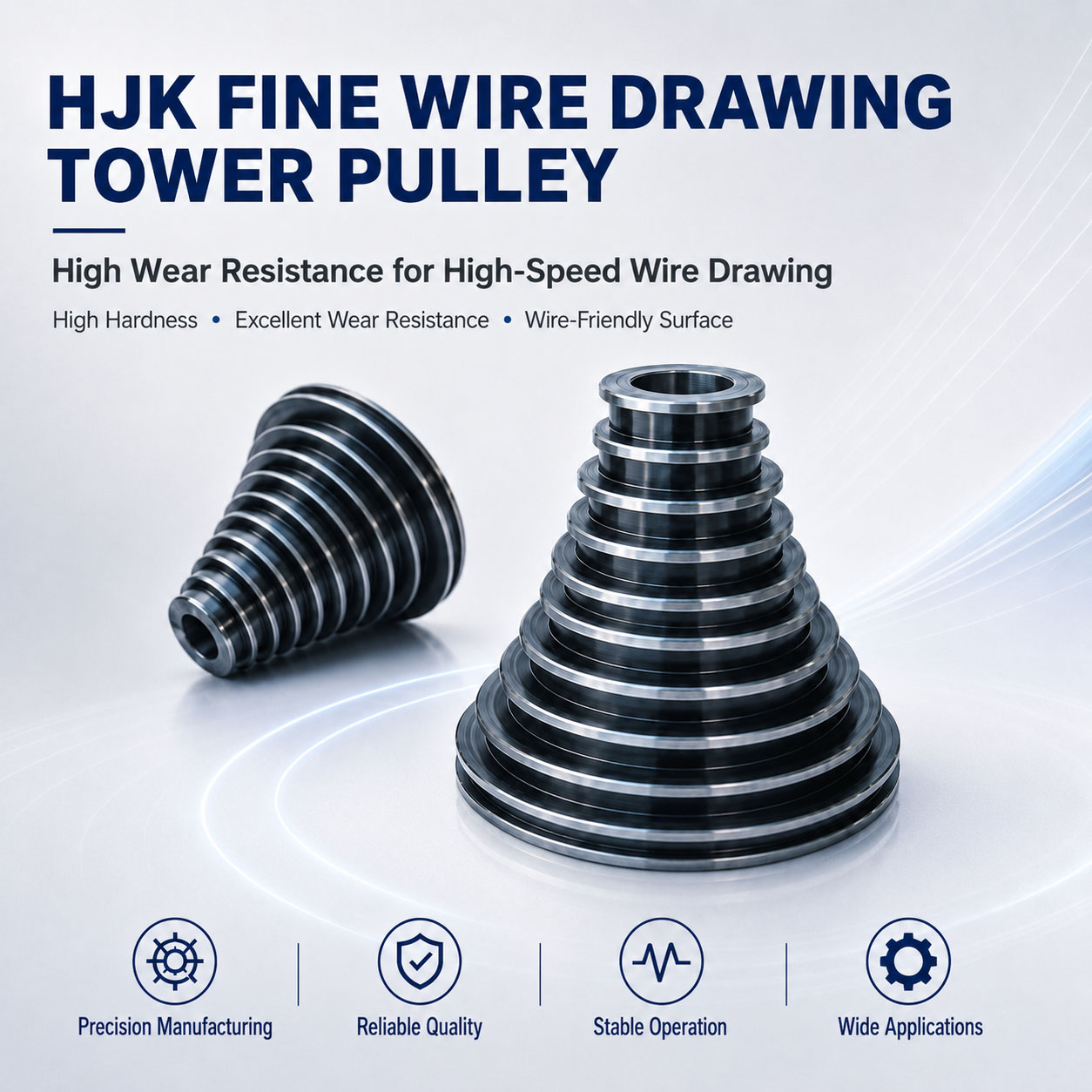
In metal wire drawing processes, the fine wire drawing machine tower pulley is a key component for power transmission and multi-stage wire reduction. With its stepped diameter design, the tower pulley works together with drawing dies to gradually reduce wire diameter while maintaining stable production speed.
Proper selection and maintenance of the tower pulley can improve wire surface quality, reduce wire breakage, and increase overall production efficiency.、
Structure and Working Principle
A fine wire drawing tower pulley usually consists of multiple grooves with different diameters integrated on a single shaft or assembled as separate sections.
During operation, the wire is pulled from the pay-off unit and passes through each groove of the tower pulley step by step. At every drawing stage, the wire diameter is reduced by the drawing die while the line speed increases accordingly.
The stepped diameter ratio determines the elongation rate of each drawing pass. Therefore, the surface condition and precision of the tower pulley directly affect wire friction, sliding performance, and final product quality.
Common Types
Integrated Tower Pulley
Machined from a single material, offering high rigidity and stability. Suitable for small-diameter wire drawing applications.
Combination Tower Pulley
Each pulley ring can be replaced separately, making maintenance easier and allowing flexible speed ratio adjustment. Commonly used in multi-pass wire drawing machines.
Materials and Surface Treatments
A high-performance tower pulley requires excellent wear resistance, hardness, and fatigue strength. Common options include:
Tungsten Carbide Coating
A tungsten carbide coating is applied to the pulley surface to significantly improve wear resistance. It is ideal for high-speed wire drawing applications, extending service life and maintaining stable performance.
Ceramic Coating
Ceramic coatings such as chromium oxide or aluminum oxide provide a low friction coefficient and excellent surface protection, helping reduce wire scratches and improving surface finish.
Hardened Steel
A cost-effective option suitable for low-speed and light-load wire drawing conditions.
The appropriate surface treatment should be selected according to wire material, drawing speed, lubrication conditions, and production requirements.
Selection Guide
When choosing a fine wire drawing machine tower pulley, consider the following factors:
- Wire Material and Diameter Range
Copper, aluminum, and steel wires have different requirements for hardness, friction, and surface performance. - Drawing Passes and Reduction Ratio
The number of pulley steps and diameter design should match the drawing process to ensure balanced deformation. - Machine Compatibility
Bore size, keyway dimensions, mounting structure, and installation accuracy must match the original equipment. - Operating Speed
High-speed drawing machines require high-precision, dynamically balanced, and wear-resistant tower pulleys.
Maintenance and Troubleshooting
Maintenance Tips
- Regularly inspect groove wear and measure groove diameter to ensure it remains within tolerance.
- Keep the lubrication system clean to reduce friction and prevent abnormal wear.
- Check dynamic balance regularly to avoid vibration and protect bearings and wire quality.
Common Problems and Solutions
Fast Groove Wear
Possible causes include insufficient lubrication, excessive wire tension, or poor coating performance. Check lubrication, adjust tension, or upgrade to a more wear-resistant pulley.
Wire Surface Scratches
Usually caused by rough groove surfaces or foreign particles. Polishing, cleaning, or replacement may be required.
Excessive Pulley Runout
Check bearing condition and installation accuracy, then recalibrate or replace damaged components.
Frequently Asked Questions
How long does a fine wire drawing tower pulley last?
Service life depends on wire material, drawing speed, working conditions, and maintenance. Tungsten carbide coated pulleys generally provide much longer service life than hardened steel pulleys under high-speed conditions.
When should the tower pulley be replaced?
Replacement is recommended when deep groove wear, excessive diameter deviation, coating damage, or frequent wire scratches occur.
Can tower pulleys be repaired?
Some pulleys can be restored through grinding or recoating. The repair feasibility depends on remaining thickness and overall condition.
Tungsten carbide coating or ceramic coating, which is better?
Tungsten carbide provides higher hardness and wear resistance, making it suitable for high-speed and heavy-load applications. Ceramic coatings offer lower friction and are suitable for applications requiring excellent surface protection.
What should be checked during installation?
Ensure accurate shaft fitting, evenly tighten fixing bolts, check radial and axial runout, and perform trial operation to confirm smooth and stable running.
Fine wire drawing machine tower pulleys provide reliable performance for precision wire production, improving drawing stability, reducing maintenance costs, and ensuring high-quality wire output.
