

Coating Service Overview
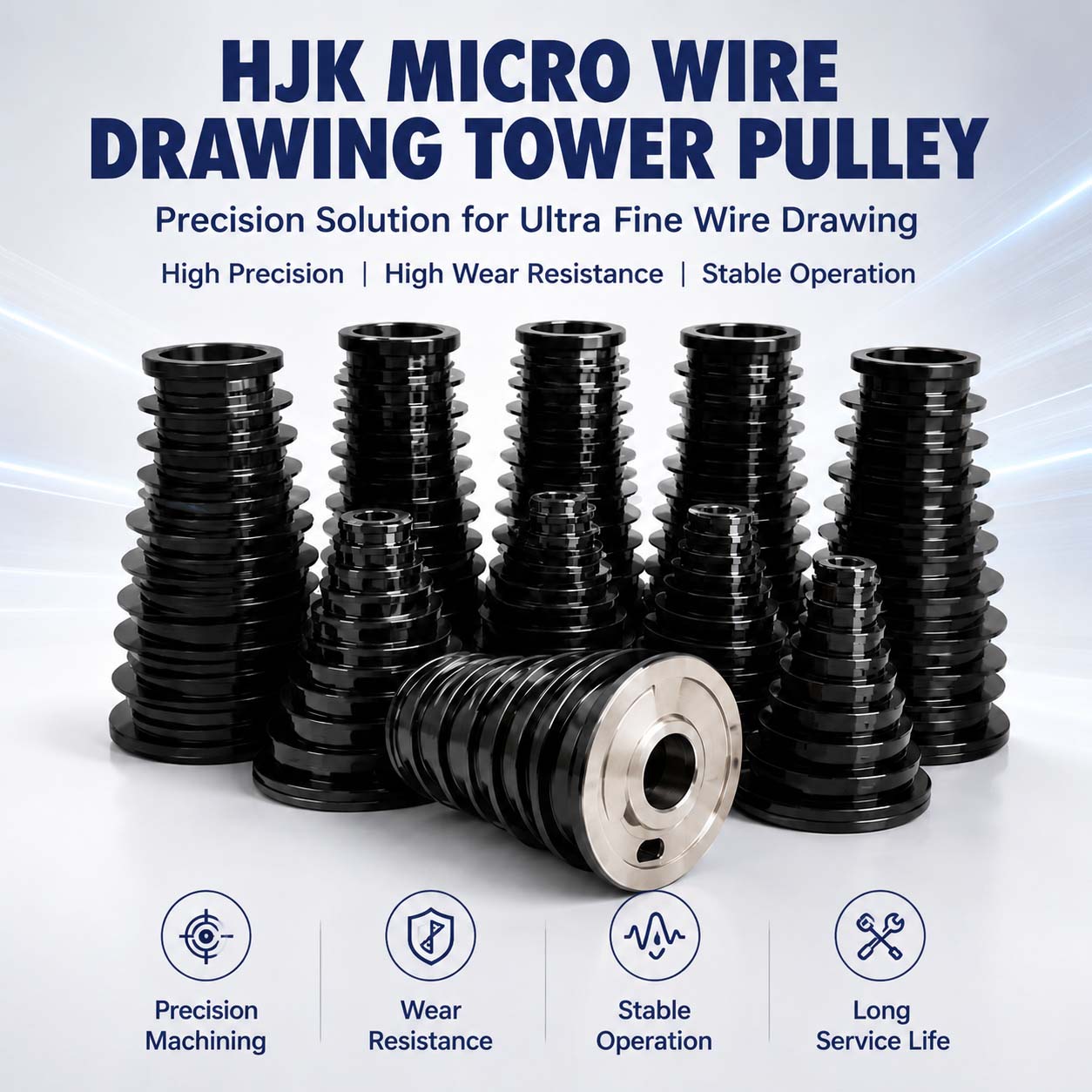
In the fine wire drawing industry, the micro wire drawing machine tower pulley is a critical transmission component. Its precision, surface quality, and wear resistance directly affect wire surface finish, dimensional accuracy, and production stability.
For precision wires such as copper wire, alloy wire, and other fine metal wires, selecting the right tower pulley and maintaining it properly is essential to reduce wire breakage, improve production efficiency, and ensure consistent product quality.
Structure and Function of Micro Wire Drawing Tower Pulley
A micro wire drawing tower pulley usually features a multi-step ring structure with different diameters designed according to the drawing process. Working together with drawing dies, it gradually reduces wire diameter through multiple drawing stages.
Main functions include:
- Power Transmission:
Transfers motor torque smoothly to the wire, ensuring stable drawing speed. - Wire Guidance:
Precisely guides the wire into the next drawing die and prevents deviation. - Tension Control:
The diameter difference between each step provides proper tension to avoid wire slipping or excessive stretching.
The working surface of the tower pulley requires high hardness, low friction, and excellent wear resistance to withstand continuous high-speed operation.
Materials and Surface Treatments
Different wire materials and operating conditions require different tower pulley materials and coatings.
Tungsten Carbide (Cemented Carbide)
Tungsten carbide provides extremely high hardness and excellent wear resistance. It is widely used for various metal wire drawing applications, especially high-speed and heavy-duty conditions.
Ceramic Coating
Ceramic coatings provide high surface hardness, low friction coefficient, and excellent corrosion resistance. They are suitable for applications requiring smooth surfaces and reduced wire damage.
Tungsten Carbide Thermal Spray Coating
Through advanced thermal spraying technology, a tungsten carbide coating can be applied to new or worn components, improving wear resistance and extending service life.
The best solution should be selected according to wire hardness, drawing speed, lubrication conditions, and production requirements.
Selection Guide
Size Compatibility
The tower pulley diameter, width, groove design, and center hole dimensions must match the wire drawing machine specifications. Precision micro wire drawing machines require strict dimensional accuracy.
Material Selection
- Soft wires such as pure copper are suitable for carbide or ceramic coated pulleys.
- Hard wires such as stainless steel micro wires require higher hardness materials, with tungsten carbide being the preferred choice.
Surface Quality
The working surface should be free from cracks, pores, and defects. Surface roughness is usually required to be Ra ≤ 0.4 μm to minimize friction and wire damage.
Dynamic Balance
For high-speed wire drawing, dynamic balancing is necessary to reduce vibration and prevent wire breakage.
Maintenance Recommendations
- Regular Cleaning:
Remove lubricant residue and metal particles from the pulley surface to maintain wire quality. - Wear Inspection:
Measure groove diameter regularly. Repair or replace the pulley when wear exceeds allowable tolerance. - Lubrication Management:
Keep drawing lubricant clean and maintain proper concentration to reduce abnormal wear. - Storage Protection:
Apply rust protection oil to spare pulleys and store them properly to avoid impact damage.
Worn tower pulleys can often be restored through professional refurbishment processes such as grinding or thermal spraying, reducing replacement costs and extending service life.
Frequently Asked Questions
What causes grooves on the tower pulley surface?
Common causes include excessive wire tension, insufficient lubrication, or hard particles on the wire surface. Check tension settings, lubricant cleanliness, and filtration systems.
When should a tower pulley be replaced?
Replacement is recommended when wear causes wire diameter deviation, surface quality problems, or abnormal vibration. Regular measurement helps predict replacement timing.
Tungsten carbide or ceramic coating: which is better?
Tungsten carbide offers higher toughness and wear resistance, making it suitable for high-speed and heavy-load applications. Ceramic coatings provide lower friction and better corrosion resistance, making them suitable for wet drawing and special wire materials.
What should be checked during installation?
Ensure correct shaft fit, apply uniform tightening force, and check radial runout after installation. For precision applications, runout should generally be controlled within 0.02 mm.
Can micro wire drawing tower pulleys be repaired?
Yes. Minor wear can be restored through polishing and grinding. Severe wear can be repaired using tungsten carbide or ceramic thermal spray coatings, followed by precision machining and dynamic balancing.
How long is the service life of a tower pulley?
Service life depends on wire material, drawing speed, lubrication conditions, and maintenance practices. A proper maintenance record should be established to determine the optimal replacement cycle.
Micro wire drawing machine tower pulleys provide high precision, stable operation, and long service life for modern fine wire production, helping manufacturers improve efficiency and maintain superior wire quality.
