

Coating Service Overview
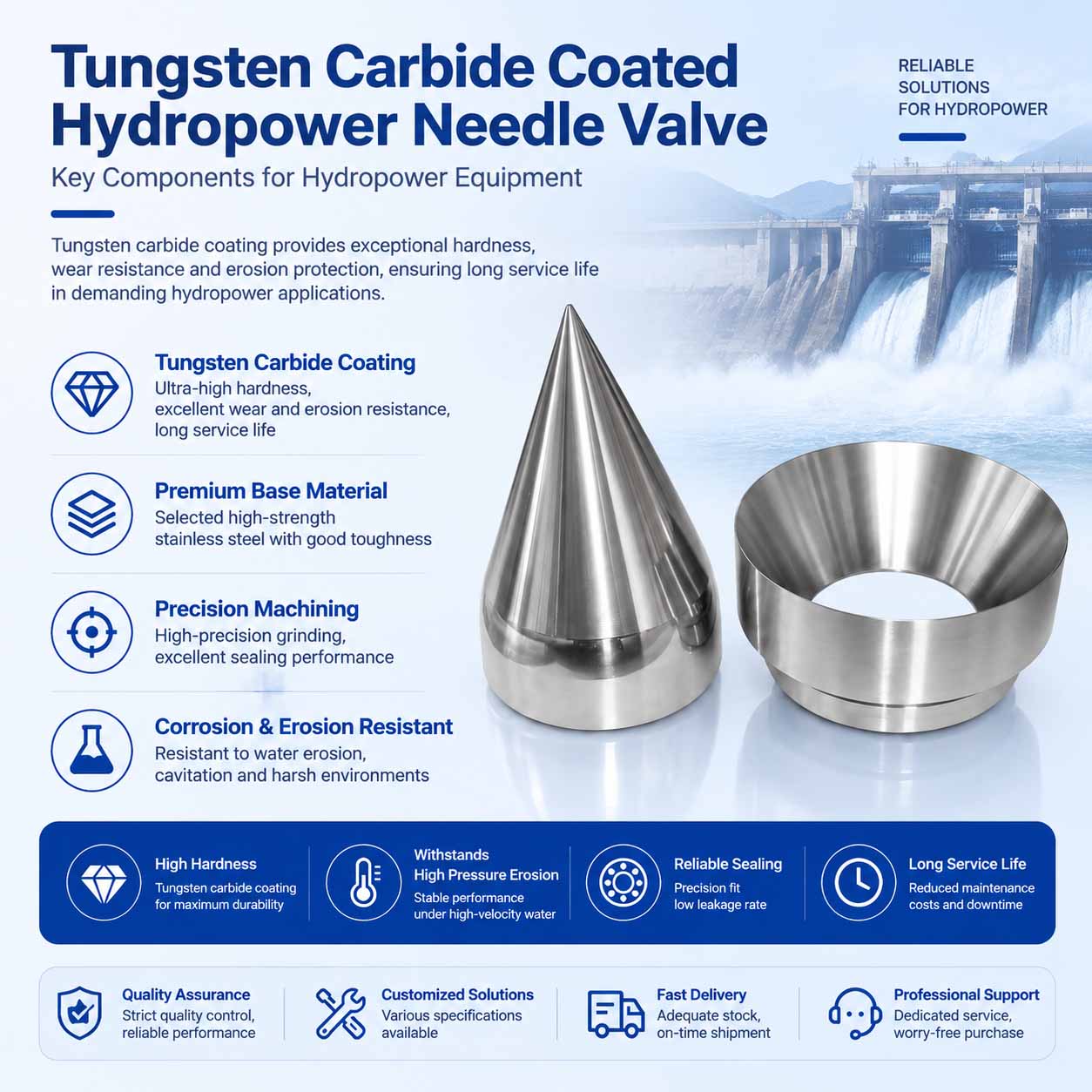
In hydropower, wire and cable manufacturing, and metal wire drawing industries, the wear resistance of critical components directly affects equipment service life and production efficiency.
Hydropower needle valves and ceramic wire guide wheels often operate under high-wear conditions, where traditional metal surfaces may suffer from erosion, abrasion, and dimensional changes.
Tungsten carbide coating technology provides an effective surface protection solution by significantly improving hardness, wear resistance, and service stability. This article introduces coating parameters, application areas, selection guidelines, and maintenance recommendations.
Tungsten Carbide Coating Specifications
Tungsten carbide coating is widely used to enhance the surface performance of industrial components.
Typical coating specifications:
- Coating Material: Tungsten Carbide
- Coating Thickness: 1–1.2 mm
Tungsten carbide provides extremely high hardness and excellent abrasion resistance. This coating thickness range offers a good balance between protection performance, coating adhesion, and substrate strength.
In practical applications, coating uniformity and bonding quality are critical factors affecting service life. Professional inspection is recommended to ensure coating reliability.
Typical Applications
Tungsten carbide coating is widely applied to various industrial components, including:
Hydropower Needle Valves
Needle valves in hydropower systems control water flow and withstand continuous high-speed water erosion.
Tungsten carbide coatings improve valve surface durability, reduce erosion damage, and extend valve component life.
Wire Guide Wheels
Ceramic wire guide wheels, ceramic-coated guide wheels, and wire rollers are widely used in wire drawing machines, winding machines, and cable production equipment.
The coating reduces friction wear between the wire and guide wheel, protects the wheel surface, and helps maintain stable wire quality.
Other Industrial Components
Tungsten carbide coatings are also suitable for:
- Drawing machine capstan wheels
- Pulling wheels
- Modular guide wheels
- Other wear-resistant transmission components
During long-term operation, the coating effectively resists abrasive wear and erosion while maintaining dimensional accuracy.
Selection and Maintenance Recommendations
How to Select the Right Product
When selecting coated components, consider the following factors:
Operating Conditions
Evaluate:
- Material type
- Working speed
- Tension or load
- Temperature
- Environmental conditions such as moisture or corrosive media
Substrate Compatibility
The coating must have strong adhesion with the substrate, such as stainless steel or aluminum alloy, to prevent peeling or cracking.
Dimensional Accuracy
For wire guide wheels, groove profile, diameter, and surface finish must match the equipment requirements to ensure smooth wire movement.
Supplier Capability
Choose suppliers with professional coating processing experience and inspection capabilities. Sample testing is recommended for critical applications.
Maintenance Guidelines
To extend coating service life:
- Regularly inspect coating surfaces for cracks, peeling, or abnormal wear.
- Avoid using hard tools that may scratch the coating.
- Prevent moisture and impact during storage.
- Ensure proper alignment during installation to avoid uneven loading and localized wear.
Frequently Asked Questions
Is a thicker tungsten carbide coating always better?
No. Excessive coating thickness may increase internal stress and cause cracking or peeling. A thickness of 1–1.2 mm is commonly used, but the optimal value depends on the application and substrate material.
What is the difference between ceramic wire guide wheels and ceramic-coated wire guide wheels?
A ceramic wire guide wheel may refer to a component made from ceramic material, while a ceramic-coated wire guide wheel usually refers to a metal component with a ceramic surface coating.
The suitable solution depends on operating conditions. Tungsten carbide coating is different from ceramic coating and is mainly focused on extreme wear resistance.
Can coated components be repaired?
Minor wear may be repaired through recoating or surface restoration. Severe coating failure or substrate damage may require replacement.
The component should be evaluated before repair.
How is coating quality tested?
Common inspection methods include:
- Coating thickness measurement
- Hardness testing
- Bond strength testing
- Surface inspection
Professional testing helps ensure coating reliability.
What water conditions are suitable for tungsten carbide coated hydropower valves?
Tungsten carbide coatings provide excellent resistance against freshwater erosion and sediment wear. However, strongly acidic or alkaline water conditions require additional evaluation.
What happens when a wire guide wheel groove wears?
Groove wear may cause wire vibration, unstable tension, surface scratches, and even wire breakage. Regular inspection and timely replacement are recommended.
Customized Tungsten Carbide Coating Solutions
We provide customized tungsten carbide coating services for hydropower needle valves, ceramic wire guide wheels, capstan wheels, and other industrial wear components.
Through advanced coating technology and precision processing, components can achieve improved wear resistance, erosion protection, dimensional stability, and longer service life in demanding industrial environments.
