

Coating Service Overview
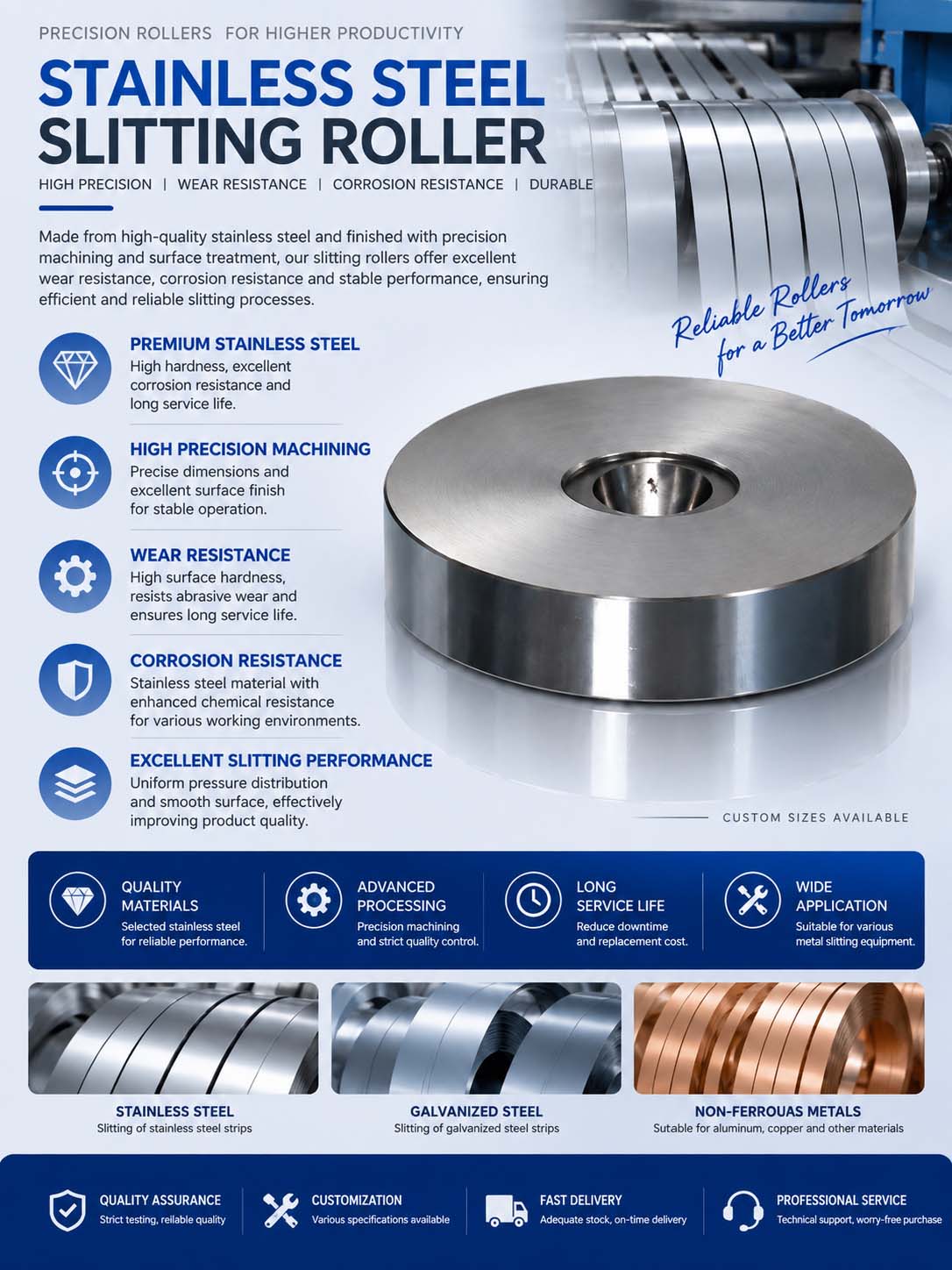
In metal slitting processes, rollers are critical components that directly affect slitting accuracy, surface quality, and tool service life. Stainless steel slitting rollers are widely used due to their excellent corrosion resistance. However, under high tension, high-speed operation, and abrasive wear conditions, untreated stainless steel surfaces may still experience rapid wear.
To solve this problem, advanced ceramic coating technology is applied to the roller surface, forming a high-hardness and low-friction protective layer. This significantly improves wear resistance, extends service life, and reduces downtime caused by maintenance and replacement.
What Is a Ceramic-Coated Slitting Roller?
A ceramic-coated slitting roller is produced by applying a thermal spray ceramic coating onto a stainless steel substrate. Common coating materials include chromium oxide (Cr₂O₃) and aluminum oxide-titanium oxide (Al₂O₃-TiO₂) composite ceramics.
The coating thickness is typically 0.2–0.5 mm. With strong bonding strength, high hardness (HV 800–1200), and surface roughness controlled below Ra 0.4 μm, ceramic coatings effectively resist scratching, abrasive wear, and friction damage caused by metal strips.
Advantages of Ceramic-Coated Rollers
Excellent Wear Resistance
Ceramic coatings provide much higher hardness than conventional steel surfaces, effectively reducing abrasive wear and adhesive wear during slitting operations.
Low Friction Performance
The smooth ceramic surface reduces friction between the roller and metal strip, lowers energy consumption, and helps prevent surface scratches.
Superior Corrosion Resistance
Ceramic materials have excellent chemical stability and can withstand exposure to coolants, lubricants, and humid environments.
Anti-Sticking Performance
The coating reduces metal adhesion and prevents buildup on the roller surface, maintaining stable operation and consistent product quality.
Application Areas
Stainless steel slitting rollers are widely used in metal coil processing lines, especially for:
- High-tension slitting of stainless steel sheets, silicon steel, galvanized steel, and other metal strips
- High-speed slitting lines with speeds above 200 m/min
- Applications requiring high surface quality, such as automotive and appliance steel sheets
- Production environments involving cooling fluids or mild corrosive conditions
Selection and Design Considerations
Substrate Materials
304 and 316 stainless steel are commonly selected due to their corrosion resistance and mechanical strength. For heavy-duty applications, precipitation-hardening stainless steel or duplex stainless steel can also be used.
Ceramic Coating Selection
The coating material should be selected according to the working conditions:
- Chromium Oxide Coating: Suitable for sliding wear and corrosive environments.
- Aluminum Oxide-Titanium Oxide Coating: Provides better toughness and impact resistance.
The coating porosity is generally controlled below 2%. Sealing treatment can be applied when additional corrosion protection is required.
Precision Requirements
The roller diameter, width, and shaft hole dimensions must match the slitting equipment. After coating, precision grinding is performed to ensure dimensional accuracy and surface finish.
Typical requirements:
- Diameter tolerance: ±0.01 mm
- Runout: ≤0.02 mm
Maintenance and Repair
- Regularly inspect coating wear during operation.
- Clean the surface with soft cloths or nylon brushes; avoid metal tools that may damage the coating.
- Store unused rollers in dry conditions with proper anti-rust protection.
- Worn rollers can be recoated and precision-ground to restore original dimensions and performance.
Frequently Asked Questions
Will the ceramic coating peel off?
With proper surface preparation and thermal spray processes, the coating has strong adhesion and is not easy to peel under normal operating conditions. Severe impact or overload may cause local damage.
Can ceramic-coated rollers be used for all materials?
They are mainly designed for metal strip processing. Compatibility should be evaluated for non-metallic or extremely soft materials.
Can worn coatings be repaired?
Yes. The recommended method is to remove the old coating, re-spray the ceramic layer, and perform precision grinding to ensure uniform performance.
When should a roller be repaired?
Repair is recommended when coating wear exceeds the designed thickness, cracks or peeling appear, or slitting quality decreases.
How long is the service life?
Service life depends on operating conditions. In typical stainless steel slitting applications, ceramic-coated rollers can achieve 2–5 times longer service life compared with uncoated rollers.
What preparation is required before coating?
The substrate must be cleaned, degreased, and sandblasted to improve coating adhesion. Proper surface roughness and cleanliness are essential for coating quality.
