

Coating Service Overview
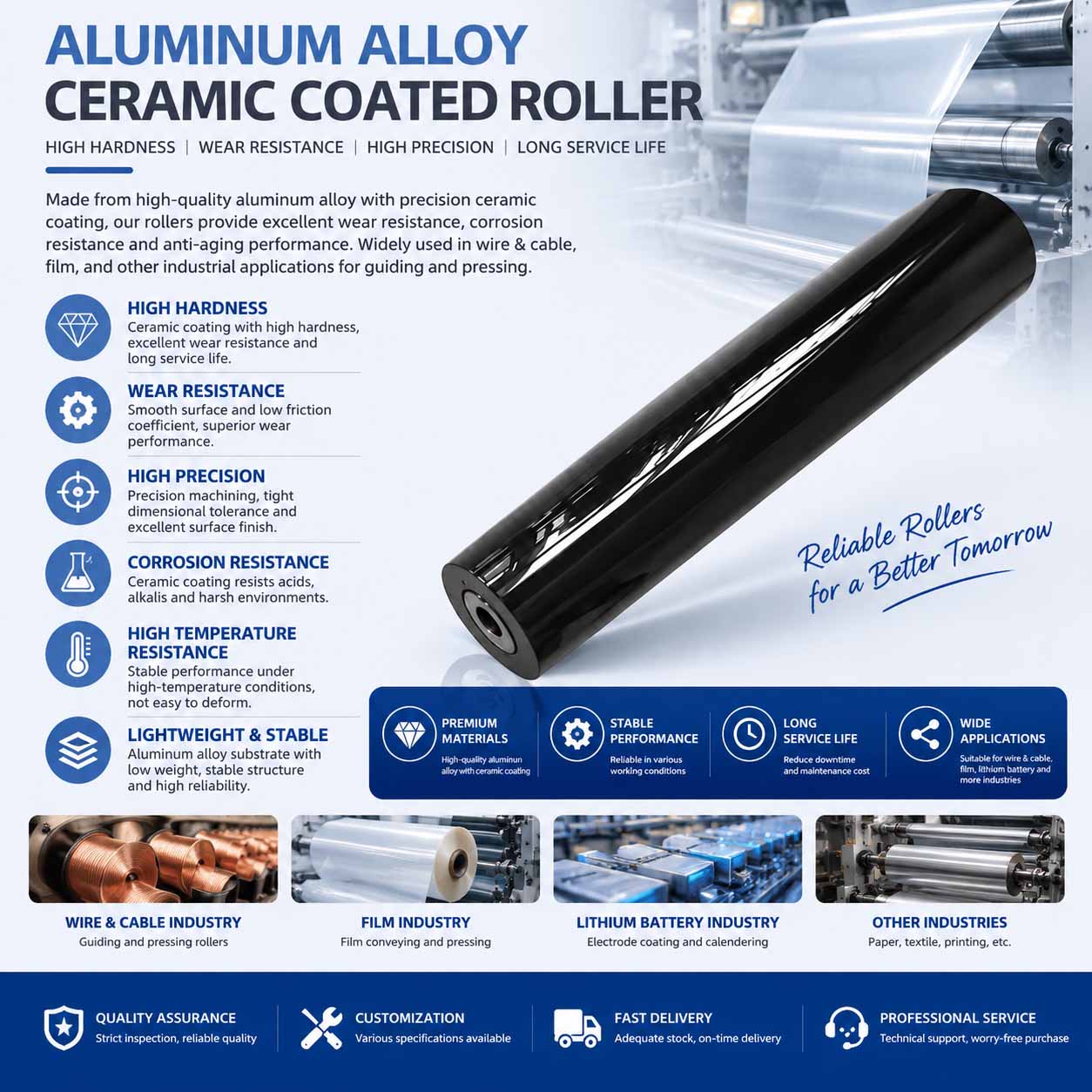
In continuous production lines such as metal processing, cable annealing, and lithium battery electrode transportation, rollers and pressing wheels are constantly exposed to friction, high temperatures, and corrosive environments.
The 45 steel ceramic coated roller uses thermal spray technology to apply a high-performance ceramic coating onto a 45# steel substrate. It combines the toughness of steel with the excellent wear resistance, corrosion resistance, and high-temperature performance of ceramic coatings, providing an effective solution for improving equipment reliability and reducing maintenance costs.
Product Structure and Manufacturing Process
The roller uses high-quality 45# steel (AISI 1045 steel) as the substrate, which is heat-treated to achieve excellent mechanical strength and toughness.
The working surface is coated using advanced thermal spray processes, including plasma spraying or High Velocity Oxygen Fuel (HVOF) spraying. Common ceramic coating materials include:
- Chromium Oxide (Cr₂O₃) Ceramic Coating
- Aluminum Oxide-Titanium Oxide (Al₂O₃-TiO₂) Ceramic Coating
The coating thickness is typically 0.2–0.5 mm. With strong bonding strength and low porosity, the coated surface can be precision-ground or polished according to specific requirements to achieve the desired surface roughness.
Performance Advantages
Excellent Wear Resistance
The ceramic coating can achieve hardness above HRC 70, effectively resisting abrasive wear and adhesive wear. This significantly extends roller service life in high-friction applications.
Superior Corrosion Resistance
The dense ceramic layer protects the steel substrate from acids, alkalis, moisture, and oxidation environments, making it suitable for annealing furnaces and chemical processing conditions.
High Temperature Resistance
Ceramic coatings maintain stable performance below approximately 800°C. Their thermal expansion characteristics match well with the steel substrate, providing good thermal shock resistance and reducing the risk of coating failure.
Optimized Surface Performance
The coating surface can be polished to achieve low roughness, reducing material adhesion and improving cleaning efficiency. Alternatively, a controlled rough surface can be maintained to increase friction when required by the process.
Typical Applications
Annealing Equipment Components
Used as heating rollers in cable and metal strip annealing lines, providing high-temperature resistance and stable operation.
Slitting Rollers
Used for guiding and pressing metal strips in slitting lines, with excellent resistance to edge wear.
Lithium Battery Electrode Rollers
Applied in electrode coating and calendering processes, requiring clean surfaces, wear resistance, and protection against electrode damage.
Battery Cell Press Plates
Provides wear-resistant and anti-stick performance during battery assembly processes.
Other Industrial Rollers
Suitable for guide rollers and tension rollers in industries such as paper manufacturing, textile production, and printing.
Selection and Customization
When selecting a 45 steel ceramic coated roller, the following parameters should be considered:
- Substrate dimensions: Diameter, length, shaft size, and installation method.
- Coating material: Select suitable ceramic materials according to wear type, temperature, and working environment.
- Coating thickness and surface finish: Determine based on roughness requirements and application needs.
- Operating conditions: Temperature, line speed, load, and contact materials.
Providing detailed working conditions allows engineers to recommend the most suitable coating solution and optimize performance.
Usage and Maintenance
- Avoid impact or collision with the coated surface during installation.
- Regularly inspect coating wear and repair promptly if the substrate becomes exposed.
- Clean with soft cloths or neutral cleaning agents; avoid hard scrapers and strong chemicals.
- Store rollers in a dry environment to prevent moisture damage and surface impact.
Frequently Asked Questions
What is the difference between a 45 steel ceramic coated roller and a full ceramic roller?
Full ceramic rollers have high hardness but are brittle, impact-sensitive, and expensive. A 45 steel ceramic coated roller combines steel toughness with ceramic surface performance and can be recoated after wear, offering better cost efficiency.
Will the ceramic coating peel off?
With proper surface preparation and thermal spray processing, the coating has strong adhesion and is not easy to peel under normal operating conditions. Severe impact or overheating may cause local damage.
Can it be used in food or medical applications?
The suitability depends on specific hygiene requirements and coating material certification. The ceramic coating itself is chemically stable, but application standards must be evaluated.
When does the coating need repair?
Recoating is recommended when wear exceeds approximately 50% of the original coating thickness or when cracks and large-area peeling affect performance.
What is the maximum operating temperature?
Chromium oxide ceramic coatings can generally operate continuously below 800°C. Actual limits depend on coating type and working conditions.
What is the delivery time?
Standard sizes may be available with short lead times. Custom products require evaluation based on dimensions, coating requirements, and processing complexity.
