

Coating Service Overview
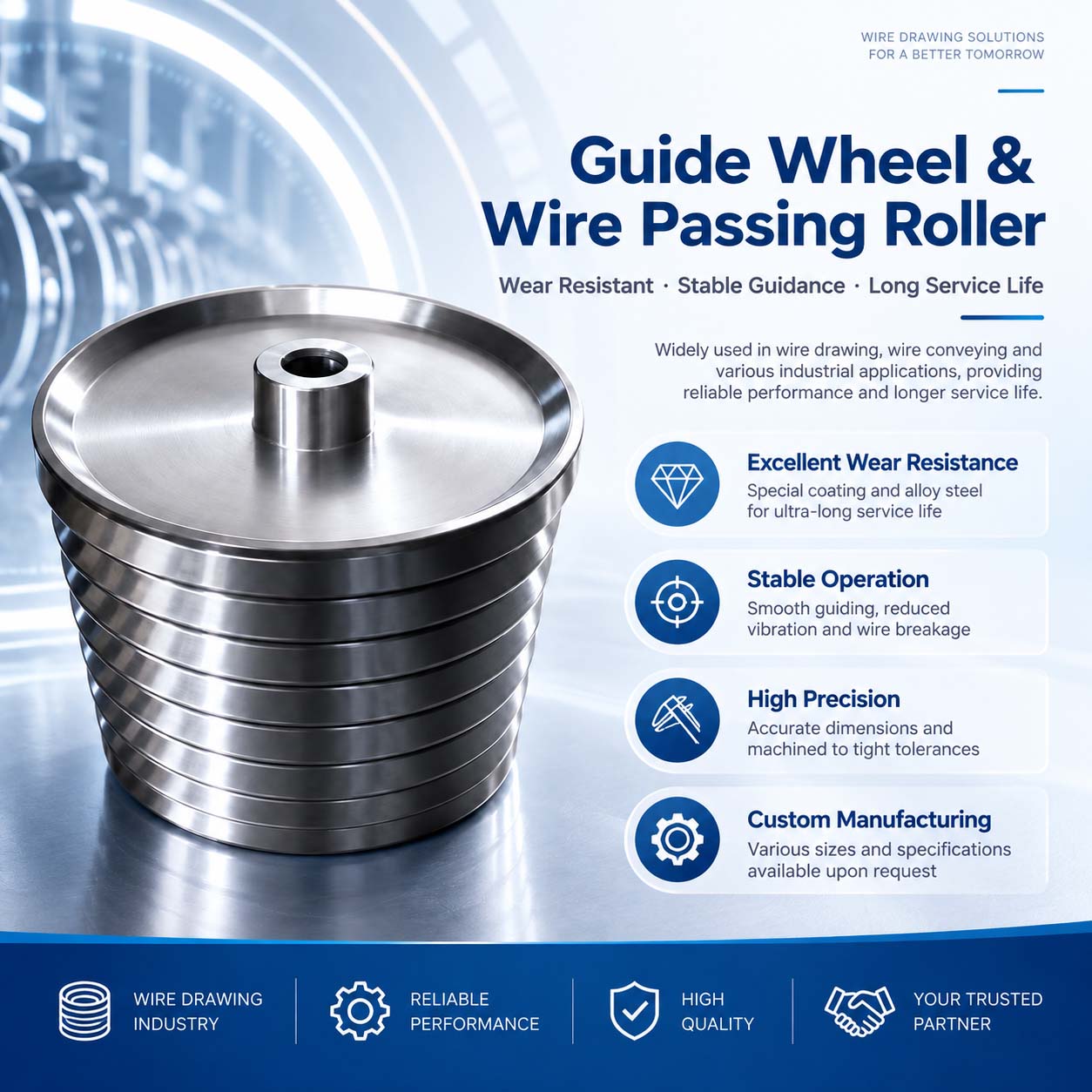
During metal wire drawing processes, guide wheels and wire passing rollers are critical components that withstand continuous friction and wire tension. Conventional steel wheels are prone to wear and corrosion under high-speed and heavy-load conditions, causing wire surface scratches, increased breakage rates, and reduced production efficiency.
HJK Tungsten Carbide Coated Guide Wheels and Wire Passing Rollers combine alloy steel substrates with advanced tungsten carbide coating technology, providing excellent wear resistance, corrosion protection, and longer service life. They are an ideal solution for improving wire quality and reducing maintenance costs.
Product Features and Advantages
HJK Tungsten Carbide Coated Guide Wheels and Wire Passing Rollers combine the toughness of alloy steel with the high hardness of tungsten carbide coating.
Excellent Wear Resistance
The tungsten carbide coating hardness can exceed HV1200, effectively resisting friction wear caused by continuous wire contact. Service life is significantly longer than ordinary hardened steel wheels.
Corrosion Protection
The dense ceramic tungsten carbide coating provides excellent resistance against drawing lubricants, cooling fluids, moisture, and chemical corrosion, preventing rust-related wire contamination.
High Strength Alloy Steel Base
The alloy steel substrate provides excellent mechanical strength and deformation resistance, making it suitable for high-tension wire drawing applications.
Smooth Surface Finish
Precision grinding after coating ensures low surface roughness, reducing friction and preventing scratches on wire surfaces.
Repairable Design
Worn guide wheels can be refurbished by removing the old coating, re-spraying tungsten carbide, and machining back to original dimensions, reducing replacement costs.
Applications
Tungsten carbide coated guide wheels and wire passing rollers are widely used in various wire drawing equipment, including:
- Large, medium, small, and fine wire drawing machines
- Dry drawing and wet drawing systems
- Copper wire, aluminum wire, alloy wire, stainless steel wire, galvanized wire, and other metal wire production
- Auxiliary wire guiding components in cable stranding machines and cable forming equipment
They are especially suitable for applications requiring high wear resistance, corrosion protection, and stable wire guidance.
Selection Guidelines
When selecting guide wheels and wire passing rollers, consider the following factors:
Wire Material and Diameter
Different wire materials have different hardness and wear characteristics. Tungsten carbide coated rollers are recommended for hard wires and high-wear applications.
Drawing Speed and Tension
High-speed and high-tension operations require excellent dynamic balance and sufficient substrate strength.
Lubrication and Cooling Conditions
Wet drawing applications require strong corrosion resistance, while dry drawing focuses more on wear resistance.
Installation Dimensions
Confirm shaft diameter, outer diameter, groove shape, and mounting dimensions to ensure compatibility with existing equipment.
Coating Thickness
The recommended coating thickness is generally 0.1-0.3 mm, depending on operating conditions and expected service life.
Maintenance and Refurbishment
Proper maintenance can further extend the service life:
- Regularly inspect the coating surface for wear, cracks, or local peeling.
- Keep the roller surface clean to prevent hard particles from scratching the wire.
- Replace drawing lubricants regularly to avoid corrosion caused by deteriorated fluids.
- Worn rollers can be refurbished by removing the damaged coating, applying new tungsten carbide coating, and precision grinding to restore performance.
Frequently Asked Questions
How long does a tungsten carbide coated guide wheel last?
Service life depends on wire material, drawing speed, tension, and lubrication conditions. Compared with ordinary hardened steel wheels, service life can typically increase by 3-5 times under suitable conditions.
Will the tungsten carbide coating peel off?
Under normal operating conditions, the coating has strong bonding strength and is not easy to peel. Abnormal impact or overload may cause local damage, which can often be repaired.
How can worn guide wheels be repaired?
The worn coating can be removed, followed by tungsten carbide re-spraying and precision grinding. The refurbished wheel can achieve performance close to a new product at a lower cost.
Are these rollers suitable for all wire drawing machines?
Yes. Customized production is available according to customer drawings, samples, or equipment specifications.
How should coating thickness be selected?
A thickness of 0.1-0.3 mm is commonly used. Heavy-load applications may require thicker coatings, depending on dimensional tolerances and operating conditions.
When should the guide wheel be replaced or repaired?
Repair or replacement is recommended when deep wear grooves appear, wire surface quality decreases, or wire breakage rates increase abnormally.
Conclusion
HJK Tungsten Carbide Coated Guide Wheels and Wire Passing Rollers provide high hardness, excellent wear resistance, corrosion protection, and stable operation for modern wire drawing equipment. They help reduce downtime, improve wire surface quality, and extend the service life of key drawing machine components.
