

Coating Service Overview
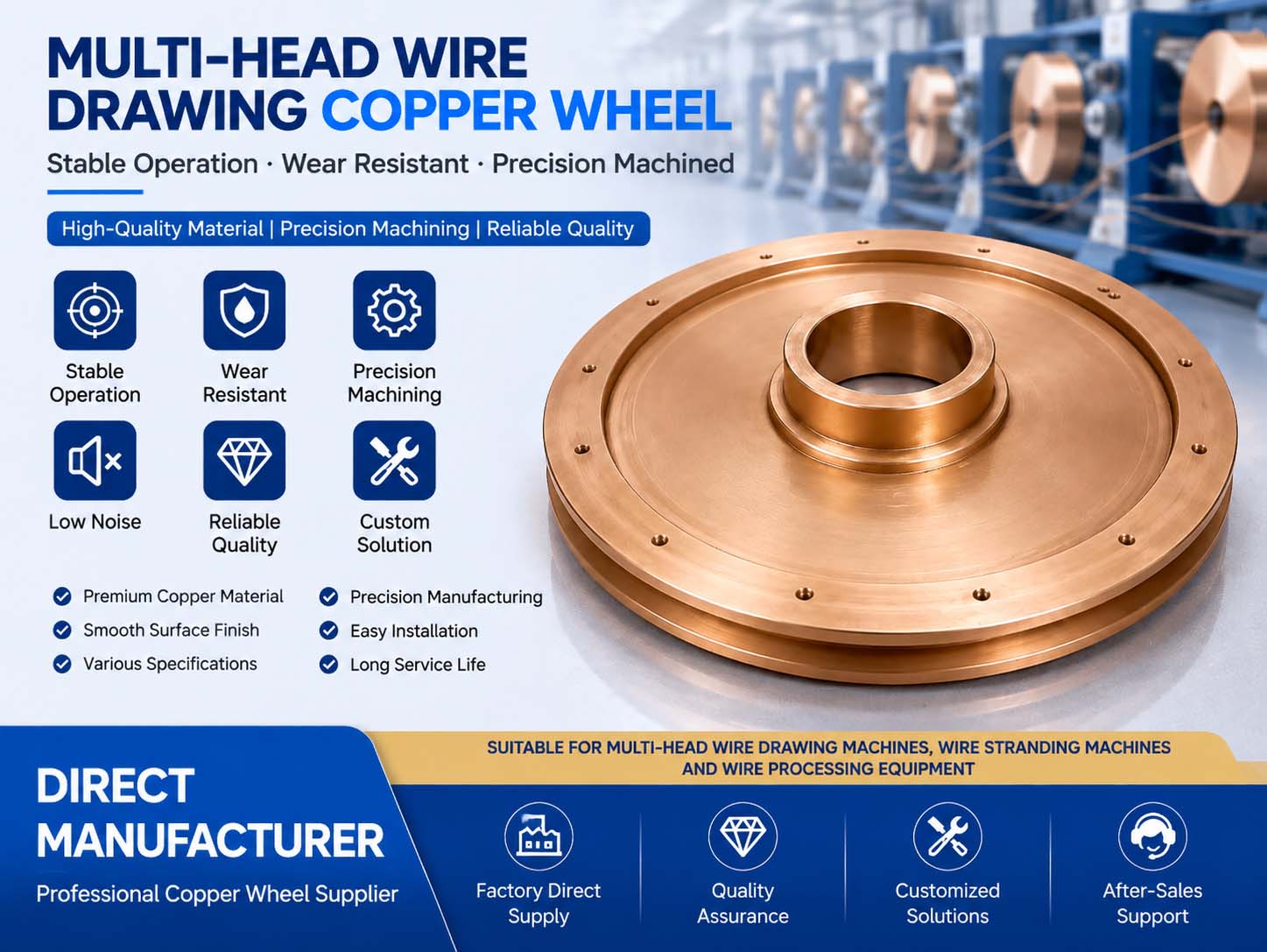
In metal wire processing, multi-head wire drawing machines are key production equipment, and the performance of copper wheels and cemented carbide components directly affects drawing quality and production efficiency.
This article introduces the material characteristics, applications, selection guidelines, and maintenance recommendations of copper wheels, tungsten carbide parts, and related wear-resistant components used in wire drawing and annealing equipment.
Product Overview
Multi-Head Wire Drawing Machine Copper Wheel
Copper wheels are mainly used for wire guidance and transmission during the drawing process.
They require:
- Smooth surface finish
- Good wear resistance
- Low friction performance
to ensure stable wire movement without damaging the wire surface.
Cemented Carbide Components
Cemented carbide components, including tungsten carbide parts and hard alloy accessories, are used in high-wear areas such as:
- Drawing dies
- Guide components
- Wear rings
- Precision inserts
These components are manufactured using tungsten carbide (WC) materials and provide:
- High hardness
- Excellent wear resistance
- Strong compressive strength
They are suitable for high-speed wire drawing and continuous annealing processes.
Material Features
Copper Wheel
Copper wheels are commonly made from brass or bronze materials.
Main advantages:
- Good thermal conductivity
- Suitable mechanical strength
- Smooth machining performance
The working surface requires precision machining to reduce friction and prevent wire surface damage.
Cemented Carbide Components
Cemented carbide mainly consists of tungsten carbide particles combined with a metal binder.
Key properties include:
- Extremely high hardness
- Excellent abrasion resistance
- High pressure resistance
- Stable performance under continuous operation
Common tungsten carbide components include:
- Drawing die cores
- Guide sleeves
- Roller rings
- Wear-resistant inserts
Applications
These components are widely used in:
Wire Drawing Production Lines
For copper wire, aluminum wire, and alloy wire drawing processes:
- Copper wheels provide smooth wire guidance and transmission.
- Cemented carbide components control wire diameter and resist severe wear.
Annealing Equipment
In continuous annealing lines, tungsten carbide and hard alloy parts improve equipment reliability under high-temperature and high-friction conditions.
Cable and Metal Wire Manufacturing
Used in:
- Power cable production
- Communication cable production
- Steel wire processing
- Enamel wire manufacturing
Related wear-resistant components, such as tungsten carbide rollers and coated parts, are also commonly used in similar applications.
Selection Guidelines
When selecting copper wheels and cemented carbide components, consider:
Wire Material and Diameter
Select suitable materials and dimensions according to:
- Wire hardness
- Wire diameter
- Surface requirements
Equipment Compatibility
Confirm:
- Installation dimensions
- Mounting structure
- Equipment model compatibility
to ensure proper operation.
Working Conditions
Consider:
- Drawing speed
- Operating temperature
- Lubrication method
- Corrosion environment
For continuous production lines, fine-grain and high-density cemented carbide materials are recommended for longer service life.
Maintenance Recommendations
Proper maintenance can significantly extend component life:
- Regularly inspect copper wheel surface wear and polish or replace when necessary.
- Avoid impact during installation of cemented carbide parts to prevent cracking.
- Keep lubrication systems clean to prevent contamination and abnormal wear.
- For annealing equipment, control cooling procedures to reduce thermal stress.
Frequently Asked Questions
How often should a multi-head wire drawing copper wheel be replaced?
Replacement frequency depends on:
- Wire material
- Production speed
- Lubrication conditions
Replacement is recommended when visible wear grooves appear or wire quality decreases.
Can cemented carbide components be repaired?
Minor wear can sometimes be repaired by grinding.
However, severely cracked or dimensionally damaged components should be replaced to maintain drawing accuracy.
Are tungsten carbide parts corrosion resistant?
Tungsten carbide provides good corrosion resistance, but long-term exposure to strong acidic or alkaline lubricants may affect performance.
The appropriate carbide grade should be selected according to the working environment.
How can cemented carbide quality be evaluated?
Quality can be checked through:
- Hardness testing
- Density measurement
- Metallographic inspection
- Surface defect inspection
High-quality parts should have no cracks, pores, or machining defects.
Can these components be used on different wire drawing machines?
Yes. If installation dimensions and interfaces are compatible, they can usually be adapted to different equipment.
Providing drawings or samples is recommended for confirmation.
What other components are used in annealing equipment?
Besides copper wheels and carbide components, other commonly used parts include:
- Nickel containers
- Tungsten carbide parts
- Custom-shaped carbide components
- Wear-resistant alloy components
These can be selected according to specific process requirements.
Customized Wire Drawing Components
We provide customized copper wheels, tungsten carbide components, cemented carbide parts, and wear-resistant accessories for multi-head wire drawing machines, cable equipment, and annealing production lines.
Through precision machining and advanced material technology, our products provide stable performance, excellent wear resistance, and extended service life in demanding industrial applications.
